
Dental Crowns & Bridge
When it comes to restoring damaged teeth or replacing missing ones, dental crowns and bridges offer reliable, long-lasting solutions that can transform your smile. At My Family Dental, our experienced team across Queensland, including our Townsville location, specialises in creating custom restorations that look natural and function beautifully for years to come.
What Are Dental Crowns?

A dental crown is a custom-made restoration that completely covers an existing natural tooth, acting as a protective cap that restores both the tooth’s appearance and functionality. Think of it as a tailored suit for your tooth, it’s designed specifically for you and fits perfectly over the prepared tooth structure.
Crowns are crafted from various materials to suit different needs and preferences. Traditional options include gold crowns, which offer exceptional durability, and porcelain-fused-to-metal (PFM) crowns that combine strength with aesthetics. For those seeking the most natural appearance, all-ceramic crowns made from high-strength materials like Zirconia and Alumina provide excellent results. Emax crowns represent the pinnacle of aesthetic crown dentistry, resembling natural teeth more closely than any other option available.
The beauty of modern crown dentistry lies in its versatility. Whether you need a crown for a back molar that requires maximum strength or a front tooth where appearance is paramount, we can recommend the ideal material to meet your specific requirements.
When is a Crown Needed?
Your dentist may recommend a crown in several situations to protect and preserve your tooth. Common scenarios include:
- After root canal treatment – Root canal therapy removes the tooth’s nerve and blood supply, leaving it more brittle and susceptible to fracture. A crown strengthens the tooth and prevents it from breaking during normal chewing.
- Teeth with large or multiple fillings – When a significant portion of the natural tooth structure has been lost due to decay or previous dental work, a crown provides the support needed to keep the tooth functional. Without this protection, the tooth may crack or fracture, potentially requiring extraction.
- Cracked or fractured teeth – If you have a tooth with extensive crack lines or a substantial fracture, addressing it with a crown can prevent the damage from worsening. A crack that extends down to the root can result in significant pain and may ultimately lead to tooth loss, making early intervention crucial.
- Cosmetic improvements – Crowns can cover badly shaped, discoloured, or misaligned teeth to create a more attractive smile.
- Anchoring dental bridges – Crowns are used to secure dental bridges in place and cover dental implants, making them an integral component of many restorative treatments.
How Do Crowns Work?
The crown procedure typically requires two appointments to ensure precision and quality results. During your first visit, your dentist carefully prepares the tooth by reshaping it to create adequate space for the crown. This step is performed with meticulous attention to detail, as the preparation must be exact to ensure proper fit and function.
Once the tooth is prepared, we take detailed impressions that serve as the blueprint for your custom crown. These impressions are sent to a dental laboratory where skilled technicians craft your crown to match the size, shape, and colour of your surrounding teeth. While your permanent crown is being created, we’ll fit you with a temporary crown to protect the prepared tooth.
At your second appointment, we remove the temporary crown and carefully check the fit and appearance of your permanent crown. Once we’re satisfied that everything is perfect, the crown is permanently cemented into place. The result is a restoration that blends seamlessly with your smile and functions just like a natural tooth.
With proper oral hygiene and regular dental check-ups, dental crowns can last between 10 to 20 years, making them an excellent long-term investment in your oral health.
What are Dental Bridges?

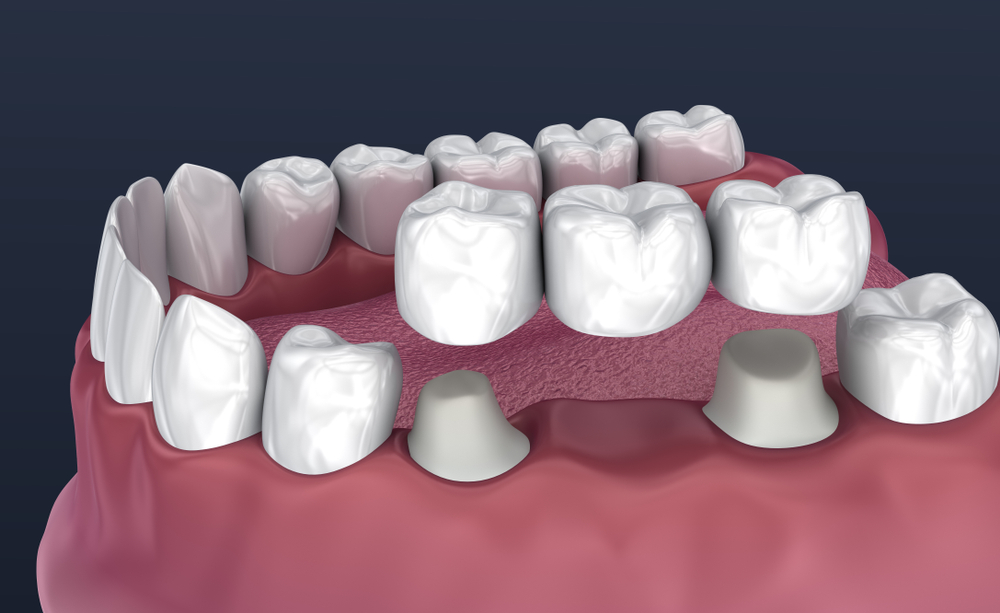
A dental bridge is a permanent prosthetic device that replaces one or more missing teeth by literally “bridging” the gap. Unlike removable dentures, bridges are fixed in place and become a permanent part of your smile.
Dental bridges consist of artificial teeth (called pontics) that are anchored to the natural teeth on either side of the gap. These anchoring teeth, called abutment teeth, are typically fitted with crowns that support the bridge structure. The pontics are custom-designed to match your natural teeth in both appearance and function, ensuring that your bridge looks completely natural.
Porcelain is the most commonly used material for dental bridges because it can be precisely colour-matched to your existing teeth. The dental bridges cost varies depending on the number of teeth being replaced and the materials used, but they represent excellent value when you consider their durability and the problems they prevent.
How Does a Dental Bridge Work?
The process of receiving a dental bridge is similar to getting a crown. During your first appointment, we prepare the abutment teeth on either side of the gap by reshaping them to accommodate the crowns that will anchor the bridge. We then take precise impressions of the prepared teeth and the gap.
These impressions are used to create your custom bridge, designed to fit perfectly and match your natural teeth. While your permanent bridge is being fabricated, we’ll provide you with a temporary bridge to protect the prepared teeth and maintain your appearance.
At your second visit, we remove the temporary bridge and carefully fit your permanent bridge. We check the fit, bite, and appearance meticulously before permanently cementing it in place. Once secured, your bridge becomes a fixed part of your mouth, requiring no special removal or maintenance beyond regular brushing and flossing.
With proper care and good oral hygiene, dental bridges can last up to 15 years or more, providing you with a beautiful, functional smile for many years to come.
When Should I Get a Dental Bridge?
A dental bridge may be the ideal solution if you’re experiencing any of the following:
- Missing one or more teeth – Bridges permanently replace lost teeth, restoring both function and appearance.
- Teeth shifting into gaps – When you lose a tooth, surrounding teeth can begin to shift into the empty space, leading to misalignment that affects your bite and makes teeth harder to clean.
- Difficulty chewing or speaking – Missing teeth can compromise your ability to chew comfortably and speak clearly, affecting your quality of life.
- Increased risk of decay and gum disease – Gaps left by missing teeth create hard-to-clean areas that increase your risk of tooth decay and gum disease in the surrounding teeth.
- Desire for a permanent solution – If you want something more permanent than removable dentures but less invasive than dental implants, a bridge offers an excellent middle ground.
A dental bridge prevents these complications by filling the gap and maintaining proper tooth alignment. Beyond the functional benefits, bridges restore your confidence and allow you to smile, eat, and speak without worry.
Contact us today if you have any questions and want to learn which option would be best for you. We provide custom restorations because your teeth are unique and require individualised care. My Family Dental has dental clinics in Emerald, Bowen, Innisfail, Townsville, Ingham, and Kalynda for your convenience.
Our Dental Crowns & Bridge Locations
Why Choose My Family Dental?
My Family Dental was founded on the principle of providing quality dentistry services to rural and regional areas of Australia. Since opening our first practice in Ingham in 2013, we’ve grown to serve communities across Queensland, including locations in Emerald, Bowen, Innisfail, Townsville, Ingham, and Townsville Palm.
What sets us apart is our commitment to personalised care. We understand that every patient’s teeth are unique and require individualised treatment. Our experienced team takes the time to understand your specific needs, concerns, and goals, then develops a treatment plan tailored specifically for you.
We accept all health funds, making quality dental care more accessible and affordable for our patients. Our crown dentist in Townsville and across our locations use the latest techniques and materials to ensure you receive the best possible outcomes.
When you choose My Family Dental for your dental crowns and bridges, you’re choosing a team that genuinely cares about your oral health and your overall experience. We take pride in the glowing reviews from our patients and in the long-term relationships we build with the communities we serve.
Frequently Asked Questions
What are the Different Crown Materials?
It is best to crown the tooth with a gold crown or a full veneer crown if it has extensive crack lines or a substantial fractured. Some of the other materials that exist are PFM crowns, all-ceramic, and Emax.
Gold crowns provide a long-lasting solution, but many people were put off by the gold cast, so a process called enamelling was introduced. Enamelling requires the dentist to apply a layer of tooth-coloured porcelain to the gold to ensure that the crown has a natural look.
All-ceramic crowns are made from high strength porcelains such as Zirconia and Alumina. This option provides the highest aesthetic outcomes and can be used on front and back teeth. If you want the most beautiful ceramic crowns, Emax is the best option as these crowns resemble natural teeth the most out of all the options.
How Long Will Dental Bridges and Crowns Last?
Our dental crowns and bridges can last for years. However, they can sometimes fall out or come loose due to age or other factors. At Aspendale Gardens Dental Care, we always recommend proper oral hygiene to preserve the crowns and bridges and ensure prostheses’ longevity. Follow our instructions for care to enjoy quality crowns and bridges for 15 years or more.
Why Should I Get a Dental Crown or Bridge?
The main reason that patients opt for crowns or bridges is to have natural-looking teeth. We work to ensure that your dental crowns or bridges fit perfectly with the rest of your teeth so nobody can notice a difference.
Other reasons to do these procedures are to cover a dental implant, protect a weak tooth from fracturing, or cover a tooth with previous exposure to a root canal treatment. You could also get a crown or a bridge if you need to replace a large filling and not enough of the tooth’s natural surface remains.
What is the Procedure of Dental Crowns?
After the tooth is ready for the crown, we shape the tooth to make space for the permanent crown. Because we are very precise about cutting the tooth during the first appointment, it can take longer than usual.
We want to ensure that the crown blends in with the rest of your smile and that the fit is just right. We take much care with making your crown, and you can expect it to last several years. If you maintain proper oral hygiene, crowns can last 10 to 15 years.
What If I Avoid Getting a Crown?
A tooth that has been exposed to root canal treatment or has had several restoration treatments or fillings will require a crown. The consequences of not getting a crown could be losing a tooth, significant pain, or major dental work. A crack could extend down to the root, resulting in more expensive treatment and pain.
Your dentist can provide you with different treatment solutions suitable for your needs. To avoid headaches, unnecessary expenses, and to restore your smile, you should consider a crown if your dentist recommends it.
How much do dental bridges cost?
The dental bridges cost varies depending on the number of teeth being replaced, the materials used, and the complexity of your case. Contact our team for a personalised quote based on your specific needs.
Can I eat normally with a crown or bridge?
Yes, once your crown or bridge is permanently placed and you’ve adjusted to it, you should be able to eat normally. However, it’s wise to avoid extremely hard or sticky foods that could damage the restoration.
Are dental crowns painful?
The crown procedure is performed under local anaesthetic, so you shouldn’t feel pain during the treatment. Some sensitivity after the procedure is normal but typically subsides within a few days.